Free course · 8 lessons · About 100 minutes
Turn the income you already earn
into lasting net worth.
A free, self-paced course on the few money habits that matter most: spending less than you earn, clearing expensive debt, building a cash buffer, investing automatically, and growing your income. Then apply each lesson with the Net Worth Tracker, Cash Flow Tracker, and 40 Financial Action Plans.
Free · Self-paced · No credit card · Already a member? Sign in
Why a good income doesn't automatically become wealth

Most people don't fall behind because they earn too little or make one big mistake. They fall behind because small leaks, expensive debt, and unplanned surprises quietly absorb the money that should be compounding.
Raises disappear into lifestyle
When spending rises with every raise, a higher income leaves nothing extra to save or invest.
High-interest debt compounds against you
Card interest above 20% grows faster than investments are likely to, so every month carrying a balance moves you backward.
Surprises become setbacks
Without a cash buffer, a job loss or repair goes on a card, and the cleanup takes years.
The Net Worth Accelerator gives you a simple order of operations for fixing all three, using your own numbers.
What the data says
We can't promise your outcome. We can show you where most households get stuck.
These Federal Reserve figures describe U.S. households in general.
37%[2]
of adults would not cover a $400 emergency expense entirely with cash or its equivalent (2025)
15% would put it on a credit card and pay it off over time, and 12% couldn't pay it at all. An emergency fund turns that kind of surprise into an inconvenience.
Lesson 5 — Make Money Work for You
22.4%[3]
average rate on credit card accounts charged interest (Aug 2026)
That is well above what investments have historically returned, which is why the course has you clear high-interest debt before investing extra.
Lesson 6 — Stay Out of Bad Debt
$409,900[1]
median net worth of families headed by someone aged 65–74 (2022)
Half of retirement-age families have less, including home equity. In the tool below, the path without a system ends near this median.
Lesson 4 — Spend Less Than You Make
Same income. Same surprises. Different system.
Understanding Your Financial Path
Two people earn the same $60,000 salary at 25. One follows the course's system.
By 65, in today's dollars: $1.9M with the system vs $410K without +$1.49M · 4.6×
Age 65 · Finish line. 40 years, same salary, same setbacks.
Without: $410,077 in net worth.
With: $1,901,375, about 4.6× as much.
| Age | Without a system | With the system |
|---|---|---|
| 25 | -$8,000 | -$8,000 |
| 30 | -$705 | $24,408 |
| 35 | $21,109 | $83,323 |
| 40 | $41,996 | $190,776 |
| 45 | $54,751 | $307,320 |
| 50 | $116,557 | $517,349 |
| 55 | $160,553 | $804,414 |
| 60 | $268,628 | $1,251,518 |
| 65 | $410,077 | $1,901,375 |
Hypothetical illustration — not a prediction, guarantee or typical result · How this is calculated
- A hypothetical person earns $60,000 at 25, with pay rising 3.5% a year (about 1% above inflation). Both paths earn exactly the same.
- Both paths save 3.2% of pay in a workplace retirement plan. The system path also saves the amount it frees up each month (10% of pay at the selected level), which goes first to the credit card, then to a 6-month emergency fund, then to investments. With the system, 50% of each raise above inflation is also saved; without one, spending rises with every raise.
- Investments return 10% a year on average and cash earns 2.5%, with 2.5% inflation. All figures are converted to today's dollars.
- The credit card starts at $8,000 with a 22% APR, in line with recent Federal Reserve data on accounts charged interest (22.4%, Aug 2026).[3] The minimum payment covers interest plus about 1% of the balance each month.
- Setbacks: 3 months out of work at 30, with benefits and spending cuts covering half the gap; a 30% market drop at 37 that returns to the long-run trend over 3 years; a car at 41; a $10,000 home repair at 45; and a $25,000 family-care cost at 55. Without a system, half the investments are sold after the drop and reinvested 2 years later.
- The car: without a system, a $30,000 new car on a 6-year loan at 9%, with payments out of spending; with the system, a $18,000 used car paid from savings.
- Not modeled: taxes, investment fees, employer matching, Social Security, and home equity.
- Calculated year by year from these assumptions. Not customer data, a prediction, or a typical result.
The path without a system is calibrated to end near the median net worth of U.S. families headed by someone aged 65–74: $409,900 in 2022.[1]
This is an illustration for education only. It isn't a prediction, a typical result, or a guarantee, and taking the course doesn't produce any particular investment return or net worth. Your results depend on your income, choices, markets, and circumstances.
The Main Course
Eight short lessons. One clear order.
Each lesson takes 5 to 18 minutes and ends with something to do with your own numbers. Start at Lesson 1, or skip to the bottleneck costing you the most.
8
core lessons
100
minutes total
40
action plans
4
money quizzes
Main course value
$297
- 1
Welcome to the Net Worth Accelerator
5 minHow the course works, what it covers, and how to get the most from it in a few focused sessions.
Do this: Pick the one money problem you most want to fix first.
- 2
The Five Money Levers
10 minThe five levers behind most financial progress: cash flow, automatic saving, simple investing, debt control, and income.
Do this: Find your current step on the Financial Stability Roadmap.
- 3
Focus On What Matters
12 minUse the 80/20 rule to find the bottleneck costing you the most, and set the rest aside for now.
Do this: Choose one bottleneck and commit to it for 30 days.
- 4
Spend Less Than You Make
15 minCreate a monthly margin: track spending, cut your three biggest categories, and pay yourself first.
Do this: Map a month of income and spending in the Cash Flow Tracker.
- 5
Make Money Work for You
15 minAutomate saving, build a 3–6 month emergency fund, and invest steadily in low-cost index funds.
Do this: Set up an automatic transfer on payday, even a small one.
- 6
Stay Out of Bad Debt
18 minList every debt, choose avalanche or snowball, stop adding new balances, and use windfalls well.
Do this: Rank your debts by interest rate and pick a payoff method.
- 7
Maximize Your Income
17 minGrow earning power through skills, negotiation, and side income without letting lifestyle absorb every raise.
Do this: Decide what share of your next raise goes straight to savings.
- 8
Your 80/20 Path to Outsized Success
8 minBring it together in a simple monthly review: check your numbers, pick the next step, repeat.
Do this: Record your net worth in the Net Worth Tracker and schedule a monthly check-in.
Included Free Tools
The tools that keep the system running.
The lessons give you the strategy. The tools keep your own numbers in one place so you can check progress every month.
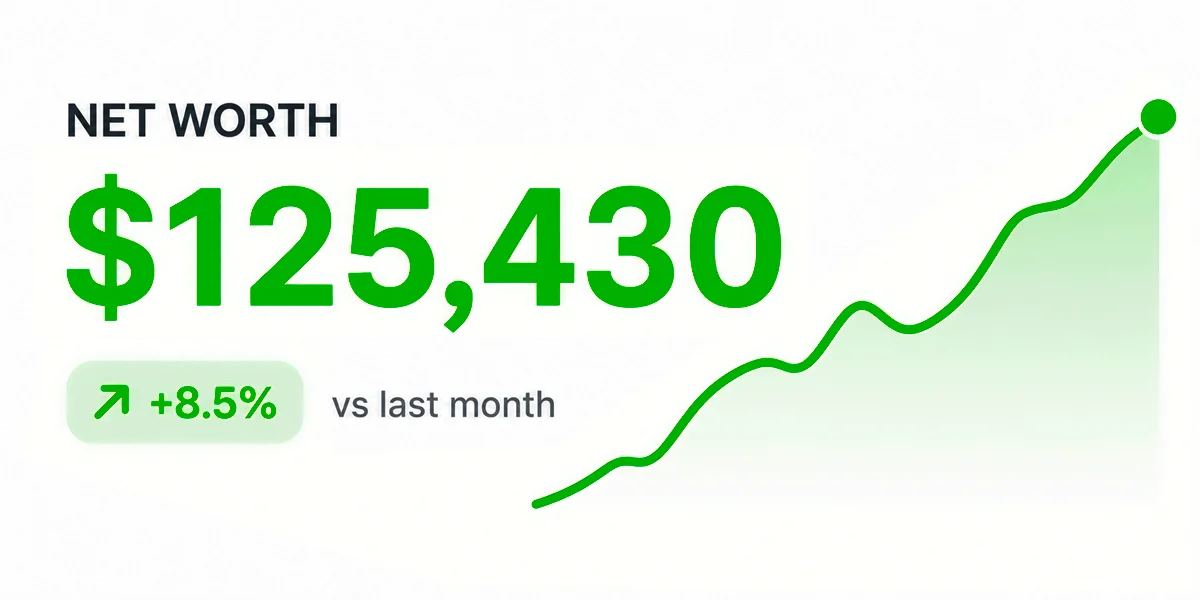
Net Worth Tracker
For people who can't tell whether they're actually getting ahead.
List your assets and debts, record your net worth over time, and see it charted. Import or export your data as CSV whenever you like.
Value
$97
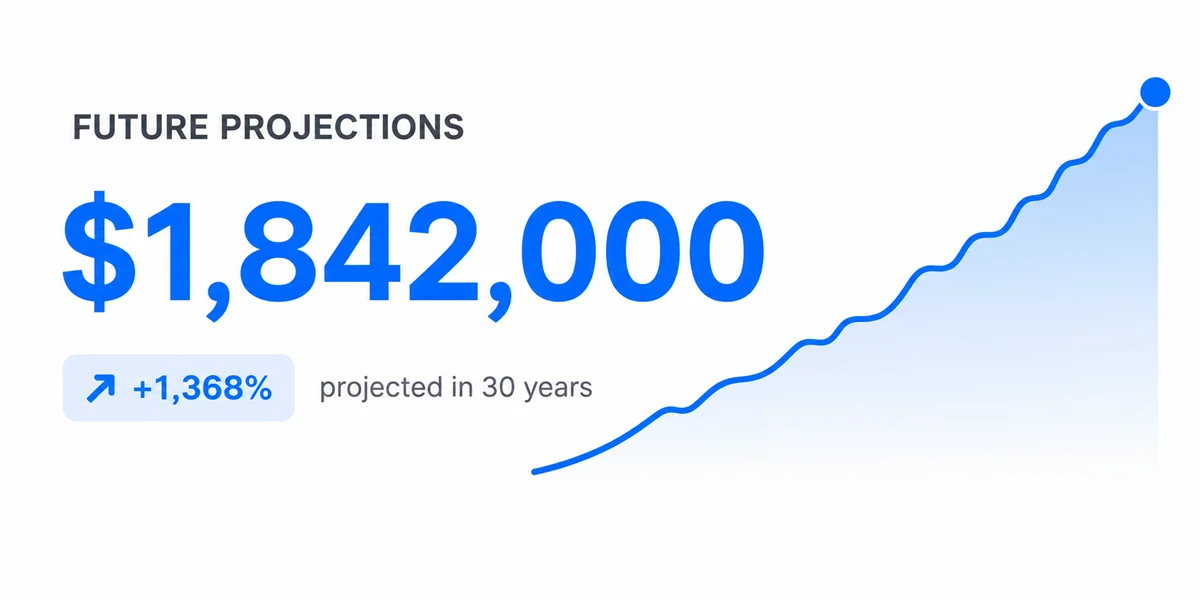
Net Worth Projections
For people who want to see where today's habits are heading.
A projections view inside the Net Worth Tracker that estimates where your net worth could be heading, with an expected path and an optimistic-to-pessimistic range.
Value
$97
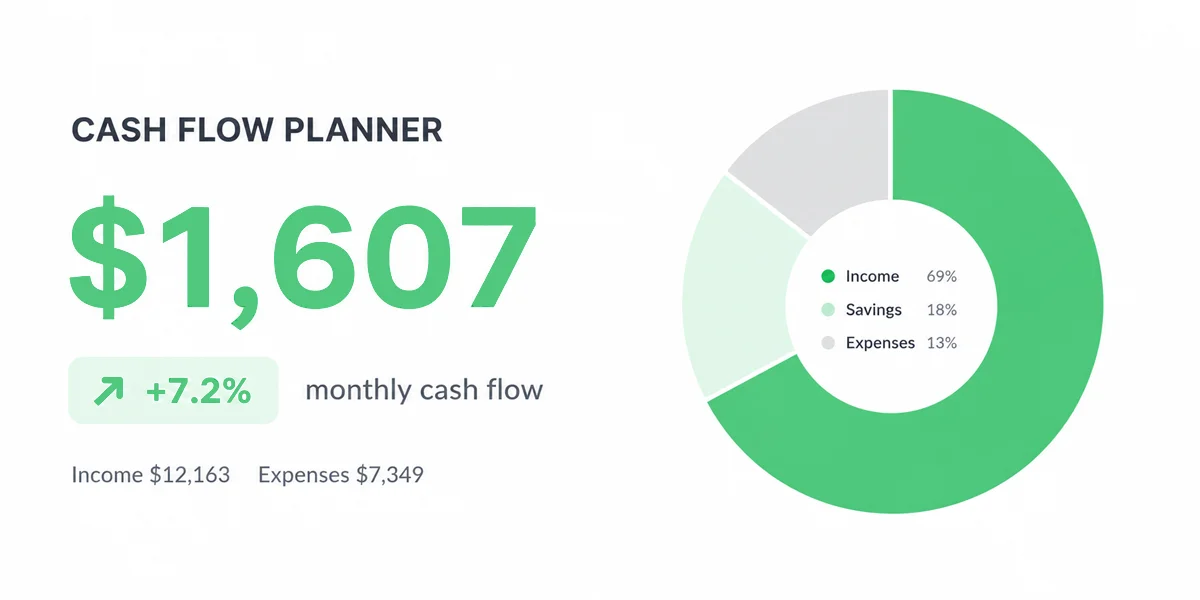
Cash Flow Tracker
For people who earn a decent income but still feel stretched.
Lay out income, bills, spending, savings, and debt payments in one monthly view. Weekly and yearly bills are converted to monthly, and a 50/30/20 check shows how needs, wants, and savings compare.
Value
$97
40 Financial Action Plans
For people who want specific next steps, not general advice.
Step-by-step plans across banking, bills and subscriptions, spending, saving, investing, debt, insurance, and income. Unlocks at 200 XP, earned through quizzes, achievements, and reviews.
Value
$197

Quizzes, XP, and Achievements
For people who start strong and then lose momentum.
Four money quizzes, XP, achievements, and net worth tracking streaks that make progress visible month to month.
Value
$47
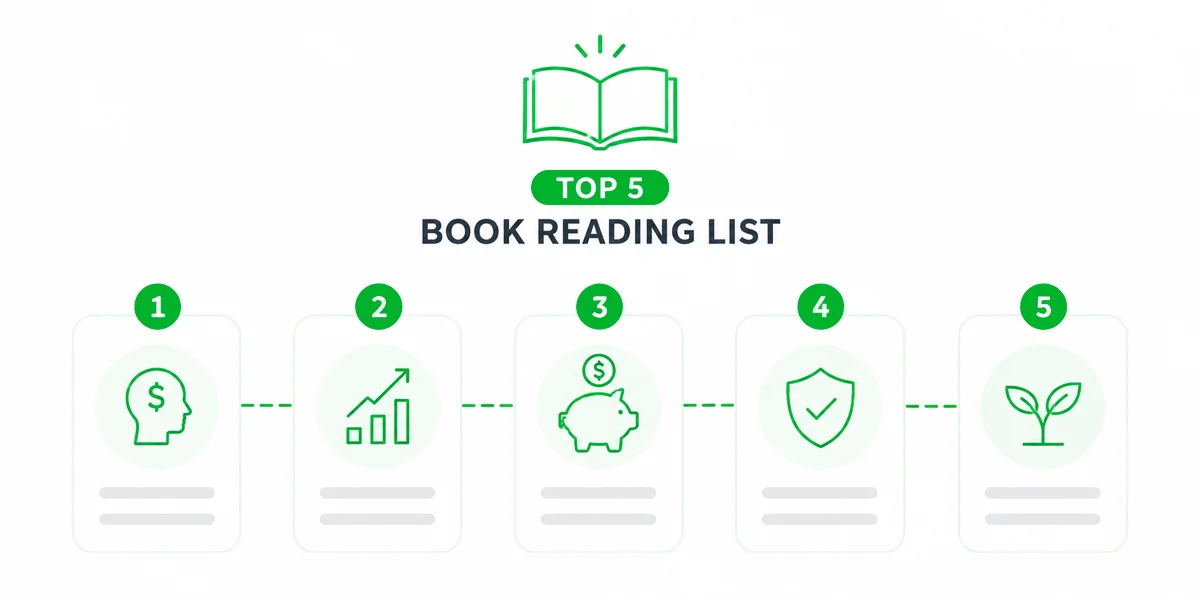
Curated Success Reading Lists
For people who know reading matters but don't know where to start.
Top-five book lists in seven categories (business, finance, productivity, leadership, marketing, communication, and mindset), drawn from a 102-book library. Unlocks at 100 XP.
Value
$47
Screenshots are illustrations with sample figures, not real member results.
Main Course
All 8 lessons.
$297
Tools and Bonuses
Three tools, 40 action plans, quizzes, and reading lists.
$582
Total Value
$297 main course + $582 tools and bonuses
$879
How we calculated this
The course value is benchmarked against what comparable self-paced personal finance courses charge. Each tool is valued at roughly one year of a comparable paid budgeting or net-worth app, and the action plans, quizzes, and reading lists are priced as standalone guides. All of it is included free with your account. We would rather show you the arithmetic than ask you to take a number on faith.
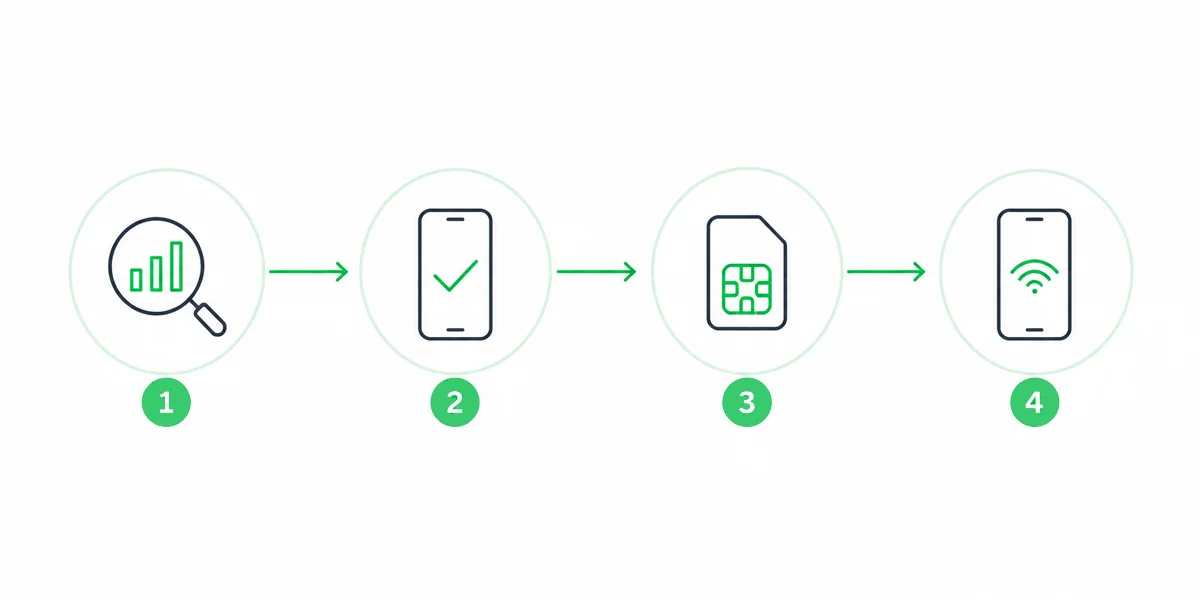
How the system turns income into net worth
A four-step loop you repeat each month. The lessons teach it; the tools keep it running.
See
Know your numbers
Record your net worth and map a month of cash flow so you know where you actually stand.
Free up
Create a margin
Find the leaks, cut the biggest categories, and pay yourself first.
Protect
Build a buffer, clear expensive debt
Hold an emergency fund and pay off high-interest balances before investing extra.
Grow
Invest and raise income
Automate investing, keep part of every raise, and check in again next month.
Who Gets the Most Value From This

People stuck paycheck to paycheck
Find where your money is leaking and build a monthly margin, even on a tight budget.

Anyone carrying debt
Learn which debts to pay first, how to stop adding new balances, and how to stick with a payoff plan.

People overwhelmed by personal finance
Skip the noise. The course focuses on the handful of habits that drive most of the results.

Those worried they're behind on retirement
See how compound growth works, why starting now matters, and where your current habits could lead, as a range rather than a promise.

Earners who want to optimize
Use the trackers and projections to turn a good income into a growing net worth.

Parents building a family foundation
Build the saving, investing, and money habits your family can build on.
Free · Self-paced · Instant access
Stop guessing where your money goes. Start building net worth on purpose.
FREE
$297 main course + $582 in tools and bonuses. No credit card.
Educational content, not personalized financial, tax, or investment advice. Examples and projections on this page are hypothetical and don't guarantee any result. Questions? Email team@networthinsights.com
Frequently Asked Questions
Where do the numbers on this page come from?
Figures marked with a bracketed number are sourced below. The Financial Path tool's figures are calculated year by year from the assumptions listed under the chart. None of these numbers are results produced by this course or a projection of what you will achieve.
- [1] Federal Reserve — Changes in U.S. Family Finances from 2019 to 2022 (Survey of Consumer Finances) Median net worth by age of family head, in 2022 dollars.
- [2] Federal Reserve — Economic Well-Being of U.S. Households in 2025, Savings and Investments Survey of Household Economics and Decisionmaking, published May 2026.
- [3] Federal Reserve — G.19 Consumer Credit release Credit card interest rate on accounts assessed interest.
Is the course really free?
Yes. A free account includes every lesson, the Net Worth Tracker, the Cash Flow Tracker, the quizzes, and the Financial Action Plans (which unlock at 200 XP, earned through quizzes, achievements, and reviews). No credit card is required. We also offer a paid course, the High-Income Skill Accelerator, for people focused on growing their income, but you never need it to use this one.
Is this financial advice?
No. The course teaches widely used personal-finance principles for educational purposes. It doesn't know your full situation, so it can't tell you exactly what to do with your money. For decisions about taxes, investments, or major debts, consider a qualified professional.
I don't have much financial knowledge. Is this for me?
Yes. The lessons assume no background and explain each idea in plain language with worked examples. If you already manage your money well, the tools and action plans are where you're likely to find the most new value.
How much time does it take?
The 8 core lessons take about 100 minutes in total, and each one stands on its own, so you can start with the topic that matters most to you. The real work happens afterward, when you apply a lesson to your own numbers.
Do I need money to get started?
No. Nothing in the course requires buying a product or service. Many of the steps, like tracking spending, cancelling unused subscriptions, and automating a small transfer, cost nothing.
What if I don't see results?
Results depend on your situation and follow-through, and we can't promise a specific outcome. The course is designed around concrete steps you can check off, and it's free, so you can try the lessons that fit you and skip the rest.
How is this different from free videos and articles?
Free content is usually a pile of separate tips. This course gives you an order of operations (see your numbers, create a margin, protect yourself, then grow) and tools that keep your numbers in one place so you can check progress each month.
What if I get stuck?
Email us at team@networthinsights.com and we'll help.