
Creating an estate plan is a milestone—but it is not the finish line. An estate plan is a living set of instructions, and the life it was built around keeps changing. People get married and divorced, children are born, assets grow, tax laws shift, and the people you once trusted to carry out your wishes may no longer be the right choice. If your documents do not keep pace, the plan you worked so hard to build can quietly stop reflecting what you actually want.
Reviewing and updating your estate plan regularly is one of the highest-leverage, lowest-cost financial habits you can adopt. A short annual check-in protects your assets from unintended distributions, reduces the odds of family conflict, and keeps your tax strategy current. This guide explains how often to review your estate plan, the exact life events that should trigger an update, and a practical checklist you can run through every year.
Why Regular Estate Plan Reviews Matter

An estate plan is more than a will. It is a coordinated strategy that can include trusts, powers of attorney, healthcare directives, guardianship designations, and beneficiary forms on your retirement and insurance accounts. Each of these pieces is written for a specific moment in your life—and that moment does not stay frozen.
When an estate plan goes stale, the consequences are rarely visible until it is too late to fix them. An ex-spouse can remain the named beneficiary on a 401(k). A guardian you chose a decade ago may no longer be able to serve. A trust written before a new tax law can leave money on the table. Regular reviews are how you catch these gaps while you still have the power to correct them.
How Often Should You Review Your Estate Plan?
A good rule of thumb is to review your estate plan on two schedules at once: a light annual review, and a deeper review every three to five years or whenever a major life event occurs. The annual pass is quick—you are mostly confirming that names, beneficiaries, and contact information are still correct. The deeper review is where you re-examine the actual structure of your plan against your current goals, assets, and the law.
What Life Events Should Trigger an Estate Plan Update?
Some updates can wait for your annual review. Others should prompt a revision right away. The following life events are the most common reasons an estate plan falls out of date—and the ones most likely to cause real damage if ignored.
Marriage or divorce
Few events reshape an estate plan more than a change in marital status. Marriage often means adding a spouse as a beneficiary, executor, or healthcare agent. Divorce usually means the opposite—removing an ex-spouse from those roles and updating beneficiary designations that may still name them. In many states, a divorce does not automatically strip an ex-spouse from every account, so manual updates are essential.
Birth or adoption of a child
Welcoming a child is one of the most important reasons to revisit your plan. You will want to name a guardian, and you may want to create or fund a trust so assets are managed responsibly until your child is old enough to handle them. Failing to name a guardian can leave that decision to a court rather than to you.
Significant changes in your assets
A windfall—an inheritance, a business sale, a big jump in home equity—or a major setback can both change the math of your plan. New assets may need new instructions, updated beneficiaries, or a trust to manage them. The distribution strategy that fit a modest estate may not fit a larger one.
Moving to a new state
Estate, probate, and property laws vary widely from state to state. A will or trust that was valid where you used to live may be treated differently after a move, and community-property rules can change how assets are owned. After relocating, have your documents reviewed by an attorney licensed in your new state.
The death or incapacity of someone in your plan
If an executor, trustee, guardian, healthcare agent, or beneficiary named in your documents passes away or becomes unable to serve, you need a replacement. This is exactly why naming backup (successor) choices matters—but even with backups, you should refresh the plan so it always has a living, capable person in every role.
Keeping Beneficiary Designations and Trusts Current

Here is a detail that surprises many people: beneficiary designations on retirement accounts, life insurance policies, and payable-on-death accounts usually override your will. It does not matter what your will says—the account pays out to whoever is named on the form. That makes these designations one of the most important things to confirm during every review.
Trusts deserve the same attention. As your family and finances evolve, a trust may need new beneficiaries, updated distribution terms, or a different trustee. Confirm that any trust you created still does what you intend and that it has been properly funded—an unfunded trust controls nothing.
Should You Use a Will, a Trust, or Both?
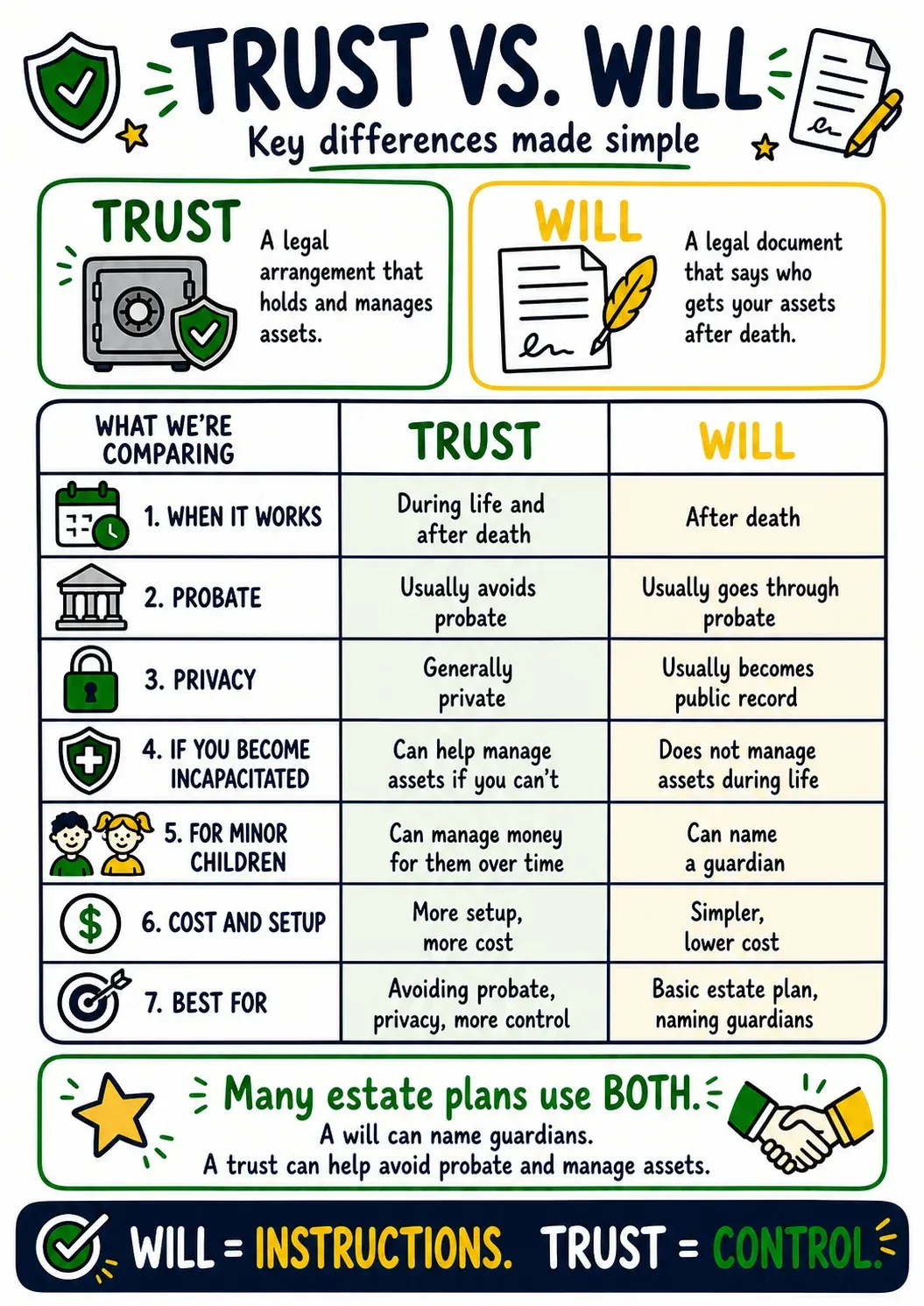
A will and a trust do different jobs, and many strong estate plans use both. A will directs how assets are distributed and can name guardians for minor children, but it generally goes through probate. A revocable living trust can help assets pass privately and avoid probate, and it can manage assets if you become incapacitated. As your estate grows more complex, a trust often becomes more valuable.
✓ Pros
- A trust can help assets avoid probate and stay private
- A trust can manage assets if you become incapacitated
- A will is simpler and can name guardians for minor children
✗ Cons
- A will alone usually goes through public probate
- A trust must be properly funded to work, which people often forget
- Trusts cost more to set up and require ongoing maintenance
Updating Guardianship, Powers of Attorney, and Healthcare Directives

A complete estate plan does more than distribute assets after death—it also decides who acts for you while you are alive but unable to act for yourself. These documents need the same regular review as your will.
Guardianship for minor children
The guardian you named years ago may have moved, changed circumstances, or grown apart from your family. Confirm that your choice is still willing and able to serve, and that you have a backup named.
Financial power of attorney
A durable financial power of attorney lets someone manage money and property if you become incapacitated. Make sure the person you named is still trustworthy, available, and appropriate for the responsibility. Learn more in our guide to setting up a power of attorney.
Healthcare directives and medical agents
Advance directives and a healthcare power of attorney spell out your medical wishes and name who can make decisions on your behalf. As your health, relationships, and preferences change, these documents should change with them.
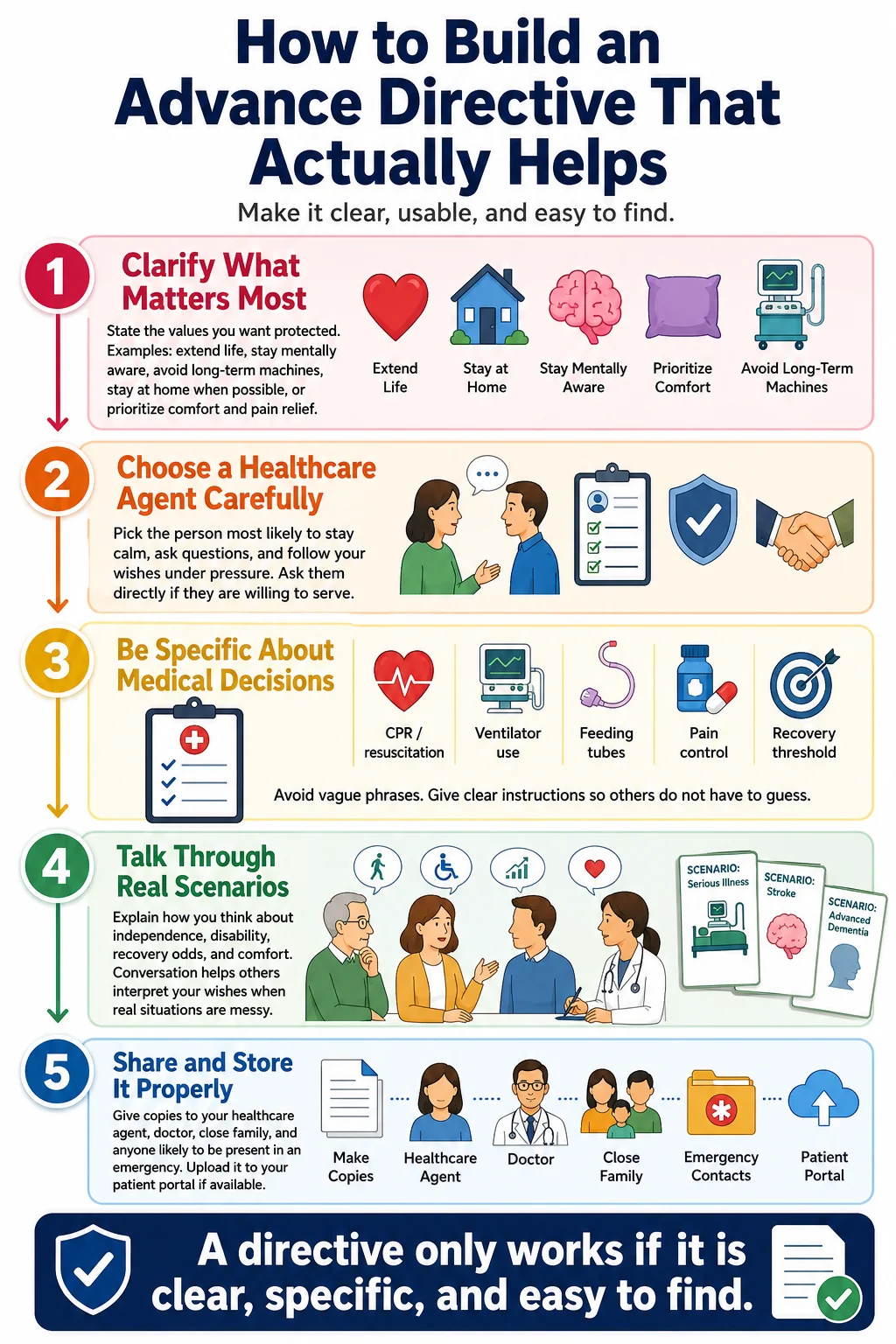
If you have not put these protections in place yet, start with our walkthrough on advance directives and your healthcare wishes.
Don't Forget Tax Strategy
Tax laws change frequently, and a plan that minimized taxes when it was written may no longer be optimal. Estate-tax exemptions, gift limits, and rules around inherited retirement accounts all shift over time. A periodic review lets you fold in current strategies—gifting, trusts, charitable giving, and account titling—to reduce what your heirs lose to taxes.
Protecting Your Children and Your Legacy

At its core, an up-to-date estate plan is about the people you love. Keeping guardianship choices, trusts, and beneficiaries current is how you make sure your children are cared for and your assets are managed the way you intend—no matter what happens. A plan that reflects your real life today is worth far more than a perfect plan written for a life you no longer live.
A Step-by-Step Estate Plan Review Process
Schedule a recurring annual review
Put a yearly reminder on the calendar. A consistent cadence means you catch necessary changes before they become urgent problems.
Re-read your documents against your current life
Pull out your will, trusts, powers of attorney, and directives. Read them as if for the first time and ask: does this still match my family, my assets, and my wishes?
Verify every beneficiary designation
Log in to each retirement account, insurance policy, and payable-on-death account and confirm the named beneficiaries. Remember, these override your will.
Engage professional guidance when needed
For anything beyond a simple confirmation, work with an estate-planning attorney and tax advisor who can flag legal changes and strategies you might miss on your own.
Document changes promptly
When a major life event happens, update your plan right away rather than waiting for the next annual review. Prompt changes prevent conflicts and oversights.
Annual Estate Plan Review Checklist
- Confirm your will still reflects your wishes and current assets
- Verify beneficiary designations on every retirement, insurance, and bank account
- Check that executors, trustees, and guardians are still willing and able to serve
- Confirm backup (successor) choices are named for every role
- Review your powers of attorney and healthcare directives
- ∼ Financial power of attorney is current and trustworthy
- ∼ Healthcare agent and advance directive reflect your wishes
- ∼ Backups are named where appropriate
- Re-examine trusts to confirm they are funded and terms still fit
- Update the plan after marriage, divorce, a new child, or a move
- Coordinate with an attorney and tax advisor on bigger changes
- Tell your executor where to find the original documents
Frequently Asked Questions About Updating Your Estate Plan
How often should I update my estate plan?
Do beneficiary designations override my will?
What happens if I never update my estate plan?
Does moving to another state affect my estate plan?
Do I need a lawyer to update my estate plan?
Conclusion
Your estate plan is only as good as the day it last matched your life. Regularly reviewing and updating it is a proactive, low-effort way to safeguard your legacy, protect the people you love, and keep your tax strategy sharp. Build the habit of an annual review, act quickly after major life events, and lean on professionals for the complex pieces.
If you are still assembling the core of your plan, start by creating a comprehensive will, then make sure you have chosen the right person to carry it out by selecting the right executor for your estate.